





Render your 3D models in a simple, easy to-use application, delivering coherent, high quality visualizations in a matter of seconds.
Experiment with different materials to test design alternatives. Visualize your project in different lighting or seasons to showcase it with more variety. Add and remove elements and work iteratively towards your vision.
With the flexible plugin or image based inputs, Visoid can be used together with any 3D design application on the market.

Set your scene, texture your model, add a ground and place some key elements in your design application. No need to use fancy elements, but make sure you hide not needed lines such as opening lines on windows and helper lines.
Export your 3D view and upload it as an image manually to Visoid or import it directly with one of the Visoid plugins.
Set some basic settings, describe the image and hit Render!
Select parts or edit to fine-tune the image in several steps.
Export the outcome in up to 4k when you are done.

Create photorealistic or stylized renderigns of your 3D models from your favourite design applications, such as Archicad, Revit, Sketchup or Rhino.
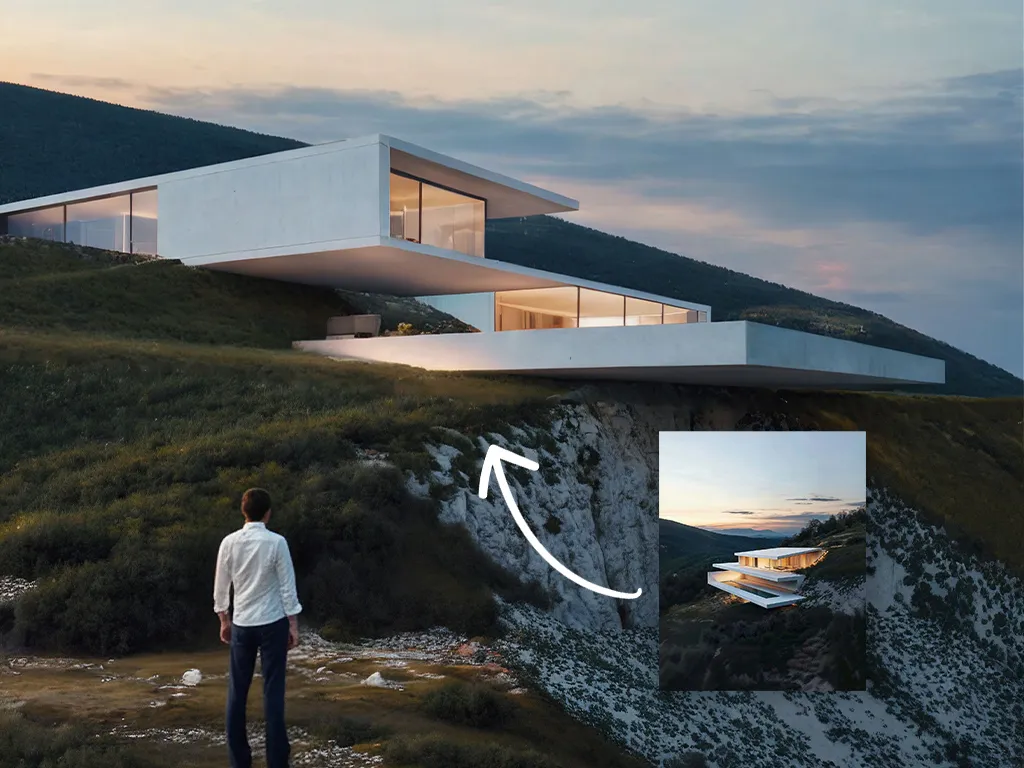
Use reference images to define style, mood and atmoshpere on your renders.

Place your building on a site photo or build a quick Photoshop collage to control the scene and environment with added elements like trees or textures.
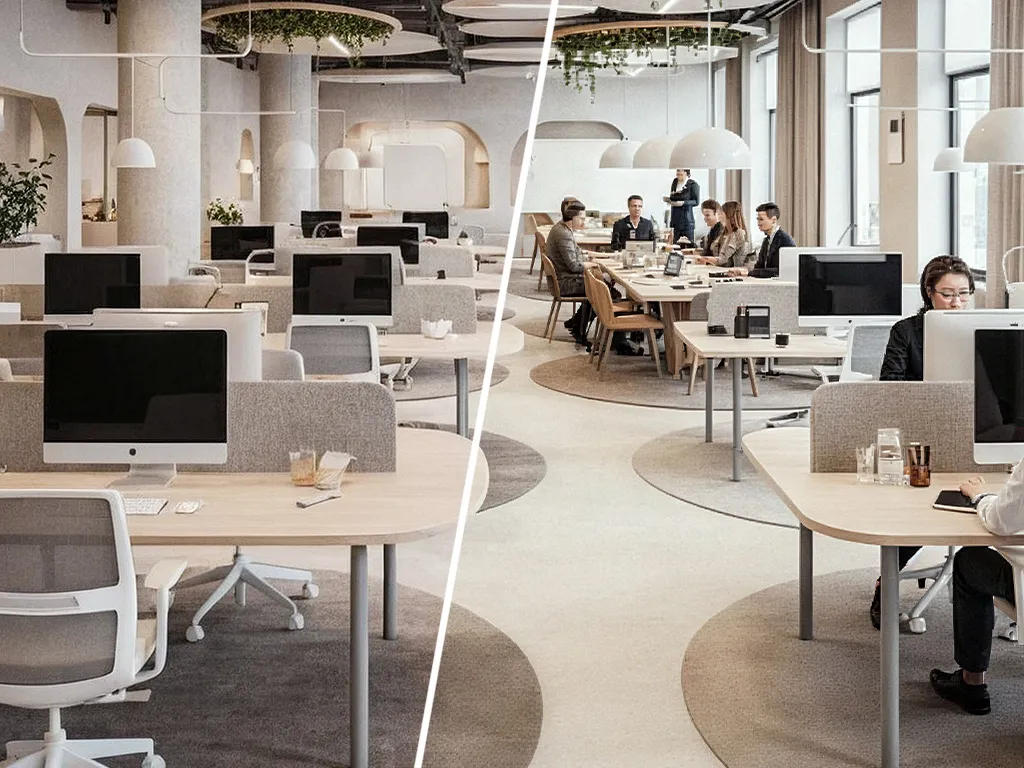
Add scale and life your images by populating them with fitting people, cars or furniture.

Create convincing renderings of your interior design.
Visoid cuts visualization time by up to 90%, boosting productivity and enabling uninterrupted work on critical project tasks.
Create more compelling images to showcase your design. Convince your clients to boost sales or municipalities to speed up processes.
A user-friendly visualization tool that requires no prior experience to operate, delivering stunning results without texture and model libraries or plugins.

"With Visoid we can create content in a matter of hours that would have cost thousands of dollars and weeks to create."

" Without Visoid, telling a story in such an early phase would be impossible. We no longer need to block out time for more experienced designers and software users to help create these images - Visoid is easily learned and used by anyone."
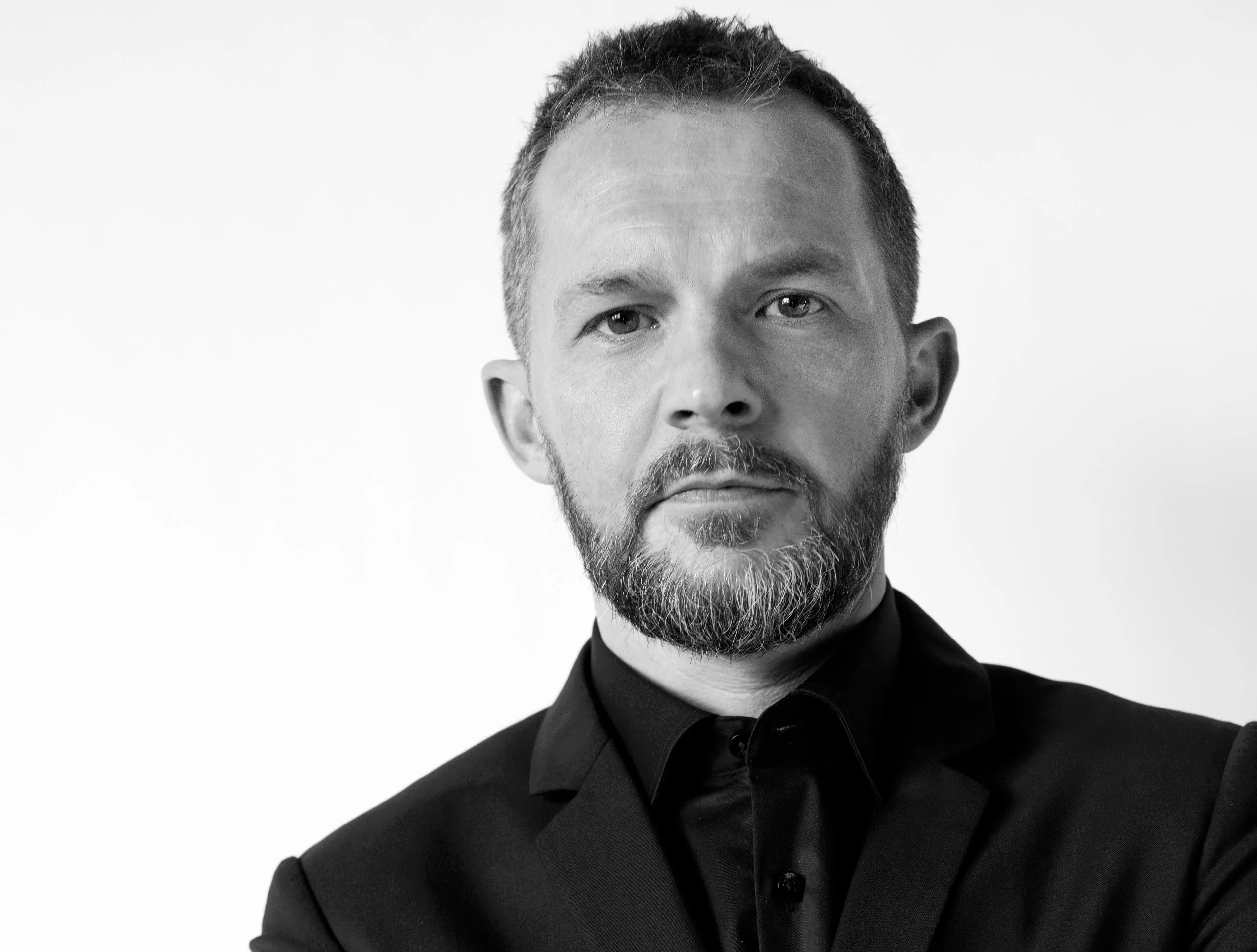
"Visoid sped up and significantly shortened the preparation of the visual part of my project presentations. It allows me to very, really very quickly create both advanced concepts and quick images used for marketing in social media."
The modern entertainment ecosystem thrives on specific structural elements designed to maximize engagement and monetization.
Local servers, manual asset indexing, standard H.264 video compression.
It looks like could refer to a few different things, and I want to make sure I’m writing the right kind of paper for you!
For decades, media consumption was a passive, collective experience. Television networks, radio stations, and major newspapers acted as centralized gatekeepers. Audiences consumed the same prime-time broadcasts, creating a highly unified cultural lexicon.
Looking forward, the entertainment content and popular media landscape will likely become more decentralized, interactive, and globalized. High-speed internet expansion and affordable mobile devices continue to bring millions of new consumers online across emerging markets, diversifying the global cultural landscape. xxxvdo2013 new
In the golden age of prestige television—think The Sopranos or Breaking Bad —a show was an event. You watched it live, you dissected it at the water cooler, and its final frame lingered in your mind for days. Today, you likely finished a critically acclaimed series three nights ago, and you already can’t remember the main character’s name.
I need a little more detail to implement this. Pick one—I'll assume reasonable defaults if you don't:
The Evolution, Impact, and Future of Entertainment Content and Popular Media
The Historical Shift: From Mass Broadcasting to Hyper-Personalization For decades, media consumption was a passive, collective
This paper investigates the "xxxvdo2013" nomenclature—a legacy tagging system widely used in 2013 for categorizing high-definition digital assets. As streaming platforms transition to AV1 and VVC codecs, the persistent use of these legacy identifiers presents unique challenges for automated indexing and digital forensics. We propose a new "xxxvdo-New" framework that leverages machine learning to map 2013-era metadata to modern semantic search protocols. Our results demonstrate a 15% increase in retrieval accuracy for archival video content while maintaining compatibility with legacy playback environments. Alternative Topic Ideas
Technology remains the primary catalyst for changes in popular media. The "streaming wars" over the past decade completely revolutionized film and television consumption, prioritizing on-demand access and binge-watching over scheduled linear television.
This guide breaks down the anatomy of this structural alphanumeric tag, why it surfaces in modern search trends, and how systems process legacy media files. Anatomy of an Alphanumeric Asset Tag
Yes, the algorithms are exhausting. Yes, superhero fatigue is real. But we are living in a golden age of access . There is a documentary, a drama, or a absurdist comedy out there waiting to change your week. Looking forward, the entertainment content and popular media
Mass media storage and metadata tagging are now handled via advanced cloud infrastructures like the Snowflake AI Data Cloud , allowing organizations to break down legacy data silos.
Web servers generate error logs, access histories, and sitemaps automatically. If a server administrator incorrectly configures a .htaccess file, system strings used internally in 2013 can be published as plain text, leading to accidental indexing. 3. Automated SEO Spam and Bot Farming
This public link is valid for 7 days and shares a thread, including any personal information you added. This link or copies made by others cannot be deleted. If you share with third parties, their policies apply. Can’t copy the link right now. Try again later.
One of the standout features of the updated xxxvdo2013 system is the emphasis on voice and tone adjustment . According to recent development updates
We are an Oslo based team comprised of passionate individuals with professional backgrounds in both architecture and technology. We are driven by a shared mission to revolutionize the world of architectural visualization by combining our expertise in digital product development with our love for creating stunning visualizations. Our goal is to bring about a lasting change in how architectural visualizations are created.


Mark is a former architect and visualization designer. He started working in 3ds max at the age of 16 and stayed in the intersection between architecture and technology since then. Mark enjoys creating solutions with a system thinking mindset and lives an active, sporty life.

Joachim is a former product developer and software engineer. He has solid experience in AI and data analytics. He is passionate about creating tools what people need and hiking in the Norwegian nature.
We'll get in touch as soon as possible!
© Essential Foundry 2026. All Rights Reserved.